Golf Course Etiquette: The Rules That Aren't in the Rulebook
Etiquette comes down to three things: keep up (play ready golf, let faster groups through), leave the course as you found it (fix divots, ball marks and rake bunkers), and be safe and quiet when others play. Get these right and you're welcome anywhere.
Nobody expects a new golfer to strike it well. What they do expect is that you know how to behave on the course. The good news is that etiquette is mostly common sense, it costs nothing, and mastering it makes you welcome at any club — from a friendly municipal like Ben Geren to a private club where you're someone's guest. Get these unwritten rules right and no one will care how you score. Here's everything a new golfer needs to know.
Pace of play — the golden rule

The cardinal sin of golf is slow play, and it's the one thing that genuinely annoys everyone. The key idea is simple: keep up with the group ahead of you, not just ahead of the group behind. If there's an open hole in front of you, you're too slow. Practical habits that keep pace: play 'ready golf' (hit when you're ready rather than strictly by who's furthest from the hole), be thinking about your shot and club while others play theirs, keep pre-shot routines short, limit yourself to a few minutes looking for a lost ball, and take your bag or cart to the next tee before marking your scorecard. If your group falls behind and a faster group is waiting, wave them through — it's normal and gracious, not an admission of failure.
Care for the course
Leave the course exactly as you'd like to find it. These four habits cover almost everything:
- Replace your divots on the fairway, or fill them with the sand-and-seed mix provided on the cart.
- Repair your ball mark on the green — push the turf in from the edges toward the centre, don't lever it up — and fix one other while you're there.
- Rake bunkers after you play, entering and exiting from the low side, and leave the rake where the course prefers.
- Follow cart rules — keep to paths where signed, observe the '90-degree rule' when in force, and never drive near greens or tee boxes.
Safety on the course
Golf balls are hard and fast, so safety is non-negotiable. Never hit until the group ahead is well out of range — wait, even if it costs you a minute. If your ball heads toward anyone, shout 'fore!' loudly and immediately; if you hear it, cover your head and turn away. Never swing a club when someone is standing close by, and be especially careful on tee boxes and around blind shots.
Courtesy to your playing partners

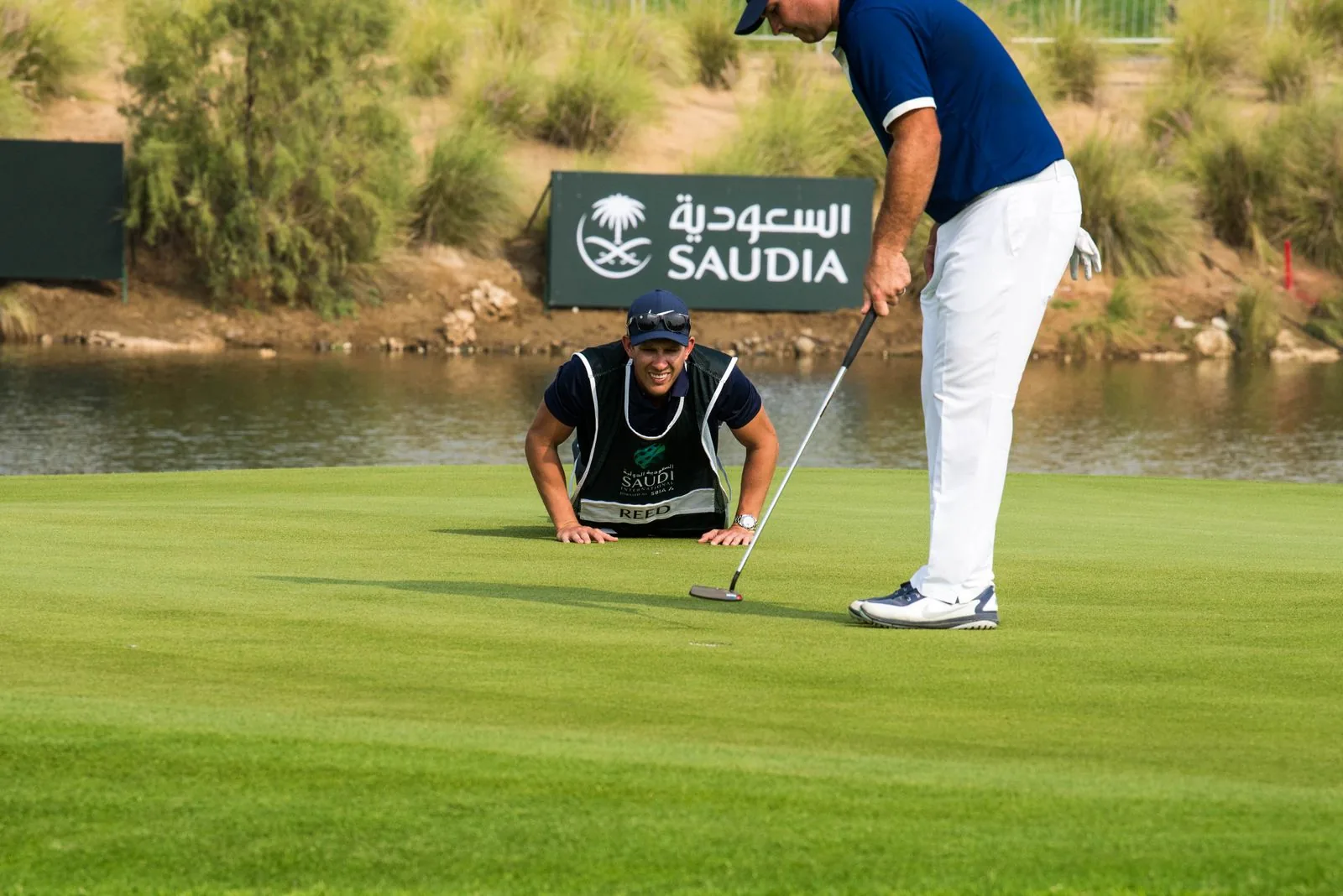
The small courtesies are what mark you as a good playing partner. Stand still and stay quiet while others are swinging or putting — no talking, no rummaging in your bag, no phone. Don't stand directly behind a player's line or cast a shadow across their putting line on the green. Let the player away (furthest from the hole) go first once you're on or near the green, unless you've agreed to play ready golf. Tend or attend the flagstick if asked. And keep phones on silent — a ringing phone on the tee is one of the fastest ways to annoy a group.
Cart etiquette in detail
Golf carts have their own set of unwritten rules, and breaking them is a quick way to damage the course and annoy the staff. Keep carts well away from greens, tee boxes and bunkers — the turf there is the most delicate on the course. Follow any posted cart-path-only signs, and when the 90-degree rule is in force, stay on the path until you're level with your ball, then drive straight across to it and back. Never take a cart between a greenside bunker and the green. And share sensibly with your partner: drop them at their ball, drive to yours, and keep the round moving. A little care keeps the fairways in the condition you'd want to find them.
Being a good guest at a private club
If a member invites you to a club like Hardscrabble or one of the private courses in this state, a few extra courtesies make you the kind of guest who gets asked back. Follow the dress code to the letter — collared shirt, proper golf shoes, no denim, and check whether shorts are allowed. Let your host guide you on pace, tipping and clubhouse customs; when in doubt, ask quietly rather than guess. Offer to cover your cart fee, caddie and any pro-shop or lunch costs, and don't assume the day is entirely on your host. Thank the staff, thank your host warmly, and write or text a note afterward. Good guest etiquette reflects on the member who brought you.
At the clubhouse and first tee
Arrive at least 15–20 minutes before your tee time to check in, warm up and reach the first tee early. Observe any dress code — most private clubs and many public courses expect a collared shirt and no denim. Tip the staff who handle your bag or cart where that's customary, and thank your playing partners with a handshake on the 18th green. These are the finishing touches that get you invited back.
New to the game overall? Understanding how handicaps work and learning how to read greens will help you play better and faster, and good course management keeps you out of the trouble that slows a round down.