Reading the Green: A Beginner's Guide to Putting

To read a green, judge slope (which way it tilts), speed (how fast the surface is) and grain (which way the grass grows). Start reading from behind the ball, trust your first instinct, and remember: distance control matters more than perfect line.
Putting is nearly half the shots in a round of golf, yet beginners spend almost all their range time hammering the driver. Learning to read a green is one of the fastest ways to shave strokes — and unlike a new swing or new clubs, it costs nothing but attention. The good news is that green-reading is a skill you can genuinely learn, not a dark art. Here's how to see what the green is telling you, and how to practise the part that matters most.
The three things you're reading
Every putt is a combination of three factors. Read them in this order:
- Slope — the overall tilt of the green between your ball and the hole. Putts always break toward the low side. Read it from behind your ball first, then check from behind the hole and from the low side of the line.
- Speed — how fast the surface is. Faster greens break more, because the ball spends longer travelling slowly near the hole where gravity pulls it downhill. The same slope breaks far more on a fast green than a slow one.
- Grain — the direction the grass grows. Putts run faster and break more travelling 'down-grain', and slower 'into the grain'. A green that looks shiny ahead of you is usually down-grain; dark and dull means into the grain.
Where to read from
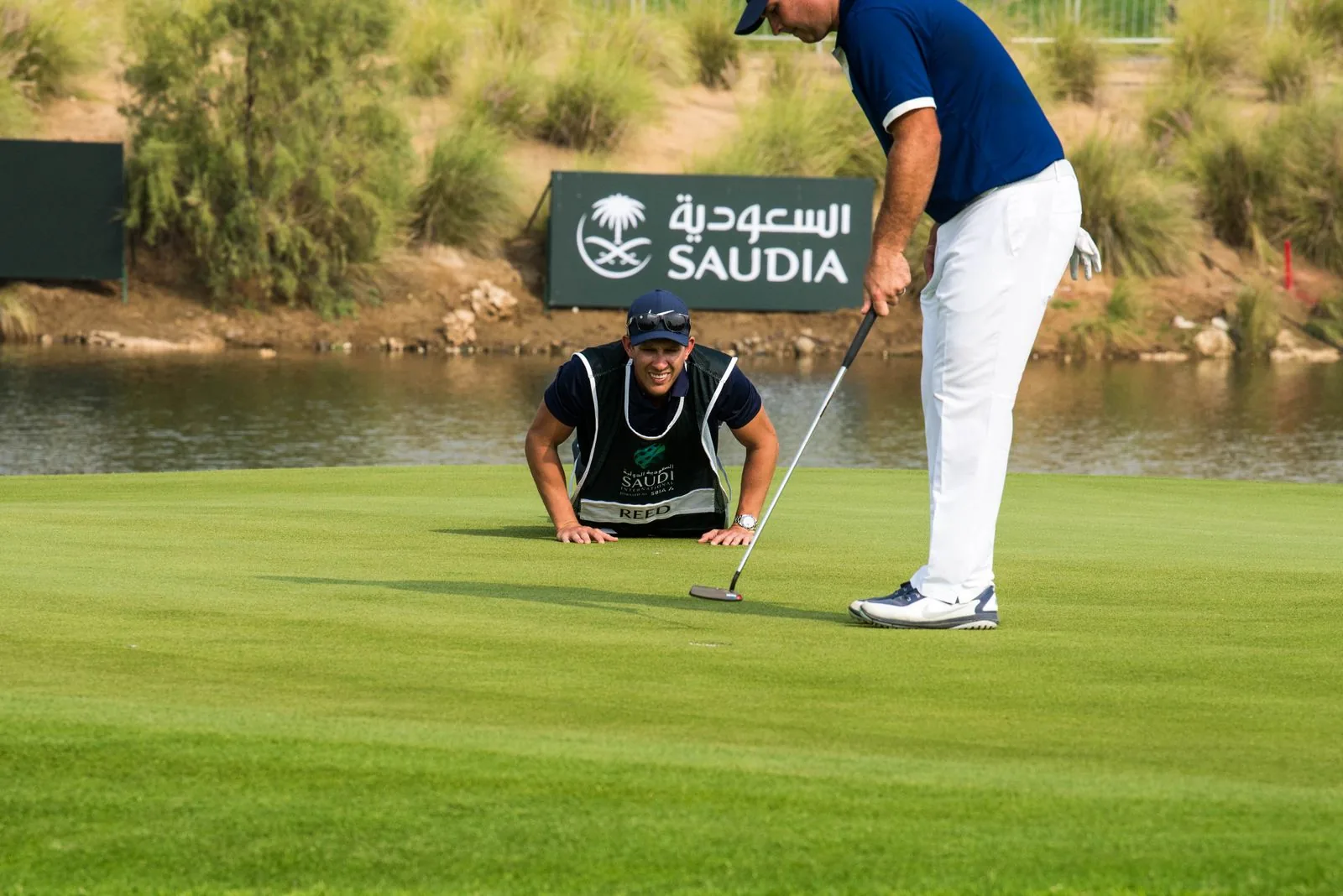
Start your read while you're walking up to the green — you see the big slopes better from a distance than up close. Then crouch behind your ball, looking down the line to the hole, which is the single most useful vantage point. For anything tricky, add a look from behind the hole and from the low side of the line, where breaks are easiest to spot. Trust your first instinct: your eyes and feet read slope surprisingly well, and second-guessing usually makes putts worse, not better.
A word on Arkansas greens
Many Arkansas courses use Bermuda grass, which is strongly grainy — a real factor here that visiting northern golfers, used to smoother bentgrass, badly underestimate. Bermuda grain often grows toward the setting sun or drains toward the nearest water, and it can push a putt sideways even on a green that looks dead flat. Late in the day, into the grain, a Bermuda green gets noticeably slower and grabbier. Feel the grass with your hand near your ball if you're unsure which way it lies, and always factor grain into your read on southern greens — it's the local knowledge that saves you two or three putts a round.
Distance control beats perfect line

Here's the truth that transforms amateur putting: most three-putts come from poor speed, not a misread line. Get the distance roughly right and you'll rarely three-putt even if your read is slightly off; get the speed wrong and the best line in the world won't save you. So spend the bulk of your practice on lag putting and distance feel, not on grooving a perfect stroke on a straight three-footer.
Uphill, downhill and sidehill putts
Slope changes not just your line but your speed, and the two interact. An uphill putt needs a firmer stroke and breaks less, because you're hitting it harder and it holds its line — always favour leaving yourself uphill putts when you can. A downhill putt is the scary one: the ball runs out fast, breaks much more, and a bold miss can run well past. Ease off, play more break, and aim to die the ball at the hole. A sidehill putt breaks toward the low side; pick a spot above the hole to aim at and let gravity feed the ball down. The golden rule from above the hole: die it in, never charge it, or you'll face the same terrifying putt coming back.
A simple pre-putt routine
A repeatable routine takes the anxiety out of putting and helps you commit. A good one has four steps: read the putt from behind the ball (and behind the hole if it's tricky), pick a spot a few inches in front of your ball on your chosen line to aim over, take one or two practice strokes looking at the hole to feel the distance, then step in, look once, and go without freezing over the ball. The key is to make your speed decision before you stand over it, so all that's left is a confident stroke. Trust the read, commit to the pace, and let the putt happen.
Drills that actually help
Two drills deliver most of the improvement. The ladder drill: putt a ball to a tee, then try to stop the next one a foot past it, then a foot past that — it trains pure distance control across changing lengths. The short-putt circle: place a ring of balls three to five feet around a hole and hole them all in a row before you move on, building the automatic confidence that saves pars. Ten minutes of each before a round does more for your score than a bucket of drives. Good green-reading pairs with good pace of play, so brush up on etiquette too, and since putting is where amateurs leave the most strokes, lowering your putts is the quickest route to lowering your handicap — right alongside a sharper short game.